
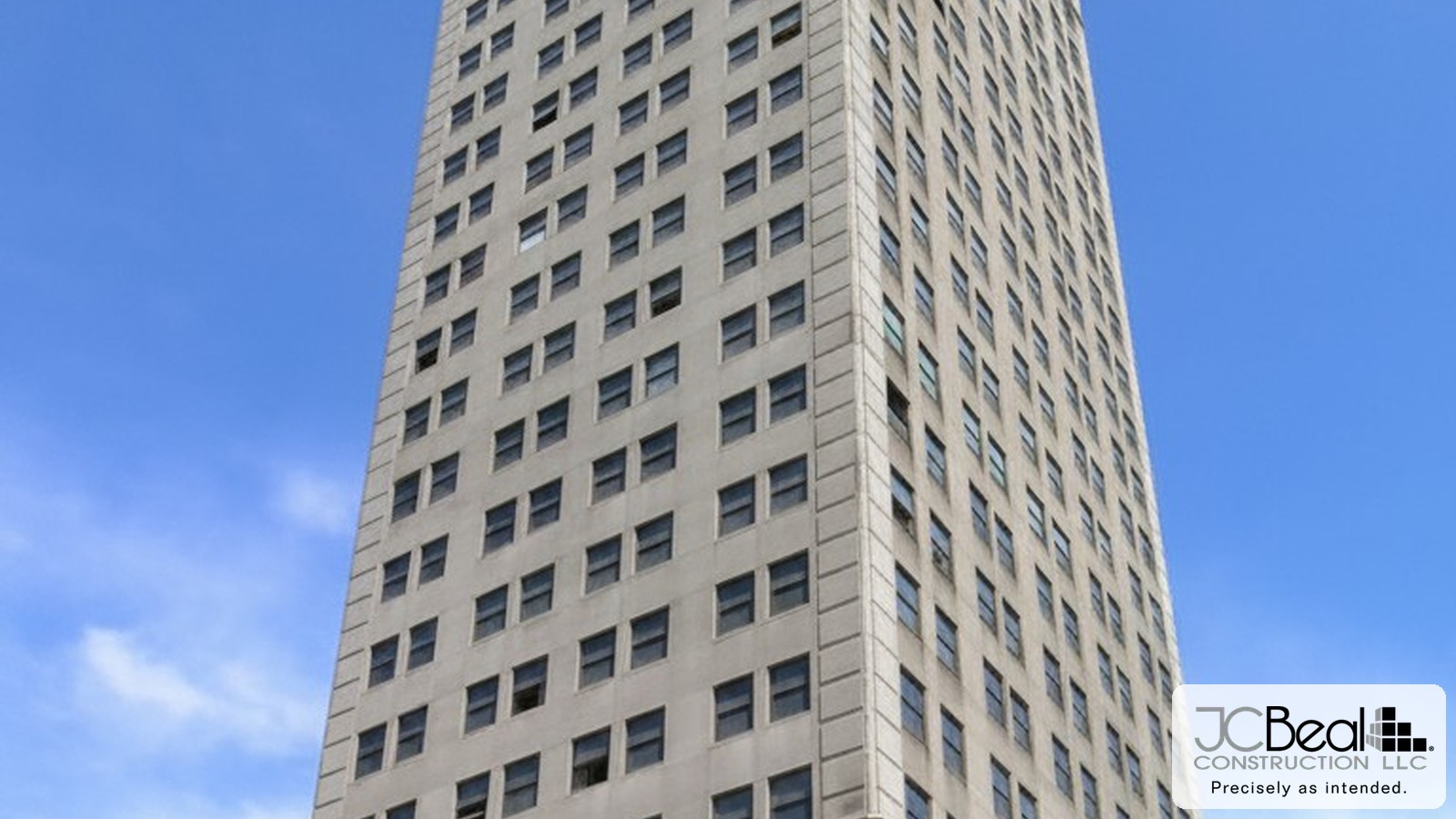
Why Downtown Revitalization Starts With the Buildings Everyone Gave Up On
Every downtown that's come back — and Detroit and Toledo both know something about coming back — has the same origin story. It doesn't start with a new tower. It starts when someone looks at a building the market wrote off decades ago and sees what it was actually built to be.
Those buildings are not the obstacle to revitalization. They're the foundation of it.
The Buildings Everyone Gave Up On Were Built to Last
The vacant structures anchoring so many downtown blocks — the 1910s bank, the 1920s department store, the pre-war office block — were constructed with load-bearing masonry, first-growth timber, and detailing that modern construction budgets simply don't attempt. Neglect hides that quality; it rarely destroys it.
What looks like a liability on a spreadsheet is often a structure that needs skilled restoration, not demolition. The bones are usually better than anything that would replace them.
Character Is the One Thing New Construction Can't Deliver
Districts that draw tenants, residents, and foot traffic have texture — streetscapes and architecture that feel like they belong to the place. That character is precisely what makes revitalized downtowns work economically: distinctive space commands attention in a way that new commodity construction cannot.
Tear down the old fabric and you don't get a fresh start. You get a downtown that could be anywhere, which is another way of saying nowhere.
The Economics Favor Restoration More Than Owners Expect
Historic rehabilitation comes with tools new construction doesn't get: federal historic tax credits covering 20% of qualified rehabilitation costs, state-level incentive programs, and local abatements aimed squarely at downtown reinvestment. Add the embodied value already standing — foundations, structure, enclosure — and the gap between "restore" and "build new" narrows dramatically, and often reverses.
The catch: capturing those incentives requires restoration executed to preservation standards, documented properly, and approved through the review process. That is contractor work as much as accounting work.
Revitalization Is a Series of Individual Decisions
Downtown momentum is cumulative. One restored building changes the calculation for the block; one block changes it for the district. Institutions, developers, and building owners who move first don't just recover an asset — they set the trajectory for everything around it.
The buildings everyone gave up on are waiting for exactly that decision.
Have a Building the Market Wrote Off?
JC Beal Construction specializes in the complex restoration work downtown revitalization depends on — historic structures, difficult conditions, and projects where getting it right matters as much as getting it done. If you own or steward a building with more history than the market gives it credit for, contact JC Beal Construction and let's talk about what it could be again.