
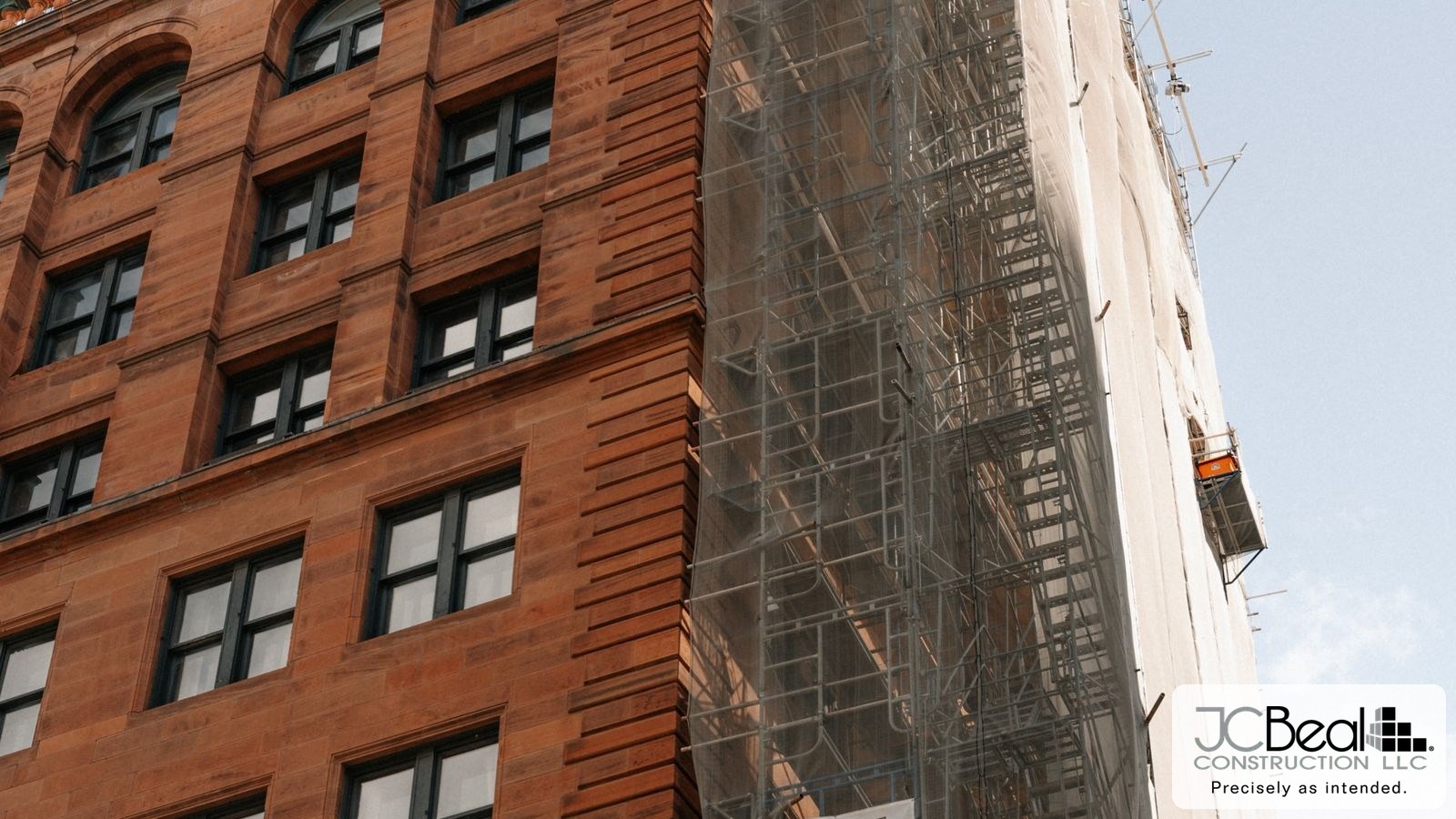
Historic Tax Credits in Michigan and Ohio: How Restoration Projects Actually Pencil for Building Owners
Owners of historic buildings in Detroit and Toledo hear the phrase "historic tax credits" constantly, usually attached to a project that seems to have worked out well for someone else. What is far less common is a plain explanation of how the credits actually change a project's numbers — and what the building owner has to do differently to earn them.
This is that explanation. Not tax advice, and your accountant and a qualified historic consultant should be at the table early. But if you own or are evaluating a historic property, this is the shape of the deal.
What the federal credit is worth
The federal Historic Rehabilitation Tax Credit equals 20 percent of qualified rehabilitation expenditures on a certified historic structure that is income-producing — commercial, office, retail, or rental residential. Owner-occupied homes do not qualify.
Two structural details drive everything downstream:
The credit is taken over five years. Since the 2017 tax law, the 20 percent is claimed ratably at 4 percent per year rather than all at once in the year the building is placed in service. That timing affects how the credit is valued when it is syndicated to an investor, and it affects your capital stack.
Not every dollar counts. Qualified rehabilitation expenditures cover the hard costs of rehabilitating the building itself and certain soft costs tied to that work. They do not include acquisition of the building, new additions that expand the footprint, site work, landscaping, parking, or furnishings. On a project where a great deal of the budget goes into a new structure or the site, the credit is smaller than a naive 20-percent-of-everything estimate suggests.
Michigan and Ohio have their own layers
The state programs are where regional projects often find the additional margin that makes them work.
Michigan reestablished a state historic preservation tax credit, administered through the State Historic Preservation Office, that can be paired with the federal credit on qualifying rehabilitations. It is a competitive, capped program with an application cycle, which means timing matters — a project that misses a round waits.
Ohio runs the Ohio Historic Preservation Tax Credit through the Department of Development, awarded in competitive rounds with defined application windows. Ohio's program has funded a large share of the downtown Toledo and Cleveland redevelopment activity of the past decade.
Both states change program details periodically — caps, percentages, and eligibility. Confirm the current terms for the round you intend to apply in rather than relying on what a project three years ago received.
The three-part application is the real work
The credits are earned through a process, and the process starts before construction, not after.
Part 1 establishes that the building is a certified historic structure — individually listed on the National Register, or a contributing building in a registered historic district.
Part 2 describes the proposed rehabilitation work in detail and gets it reviewed against the Secretary of the Interior's Standards for Rehabilitation before you build it. This is the step owners underestimate. Approval here is what protects the credit.
Part 3 certifies, after completion, that the work was performed as approved.
The failure mode is predictable: an owner starts work, makes a reasonable-seeming decision in the field — replacing rather than repairing original windows, changing a storefront configuration, altering a significant interior space — and discovers at Part 3 that the change was not consistent with the Standards. Credits get reduced or denied on work that is already installed and paid for.
What the Standards mean on an actual job site
The Secretary of the Interior's Standards are not decorative preferences. They are the rules the project is graded against, and they shape means and methods in specific ways:
- Repair before replace. Deteriorated historic features are repaired rather than replaced where repair is feasible. Windows are the most common battleground.
- Match in kind. When replacement is genuinely necessary, the new work matches the old in design, texture, and material.
- Preserve character-defining features. The elements that make the building what it is — facade rhythm, storefronts, lobby spaces, significant interior finishes — stay.
- New work is differentiated but compatible. Additions and alterations are readable as new, without imitating or overwhelming the historic fabric.
This is where the contractor selection matters more than on a conventional project. Repairing 1920s masonry, restoring rather than swapping original steel windows, and matching historic mortar composition are craft skills, not line items. A crew that defaults to replacement because it is faster can cost the ownership the credit that made the deal pencil.
How this changes the pro forma
Run the numbers honestly. Historic rehabilitation costs more per square foot than conventional renovation — the work is more specialized, the review process adds time, and the Standards remove the cheapest options from the table.
The credit exists to close that gap. On a project where federal and state credits stack, the combined benefit can offset a meaningful share of qualified costs, which is often what moves a marginal downtown building from unfinanceable to financeable. Many owners monetize the credit by syndicating it to an investor who can use it, which brings equity into the deal at closing rather than five years out.
What the credit cannot do is rescue a project that was underwritten badly. It reduces net cost on work you were going to do anyway to a standard you were going to meet anyway. Treat it as a financing tool, not a discount.
Bring the builder in during underwriting
The projects that go well share a pattern: the owner assembles the team — historic consultant, accountant, architect, and contractor — before Part 2 is submitted, so the scope that gets approved is the scope that can actually be built at the number in the model.
JC Beal Construction has spent decades on historic restoration and downtown redevelopment work across Detroit and Toledo, executing to the Standards on buildings where the credit was central to the deal. If you are evaluating a historic property and need to know what the rehabilitation will realistically cost and where the Standards will constrain your options, bring us in early. We will tell you what the building is going to require — precisely as intended.