
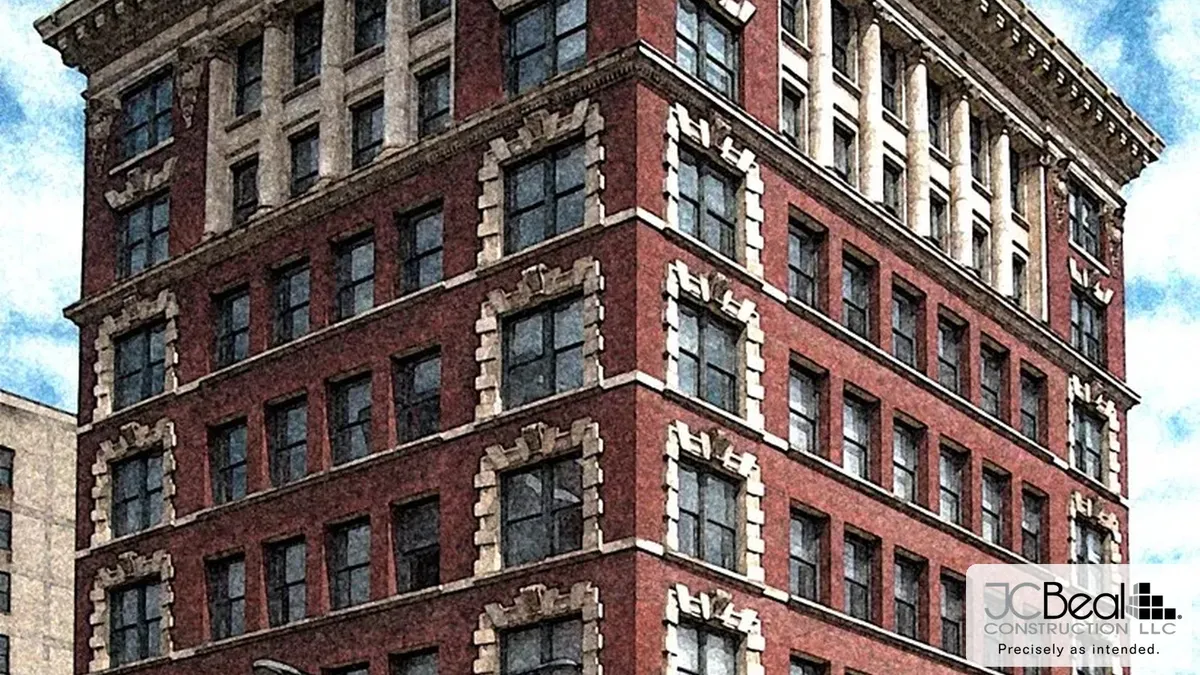
What It Takes to Restore a Century-Old Building Precisely As Intended
Every historic building carries two stories: the one told by its architecture, and the one told by every decision made about it since. Restoration done right honors both. It returns a structure to what its original builders intended — not an approximation, not a modern lookalike, but the real thing, executed with the craftsmanship the building deserves.
That standard is demanding. It's also the only one worth holding. Here's what restoring a century-old building precisely as intended actually requires.
Research Before a Single Tool Comes Out
Serious restoration begins in archives, not on scaffolding. Original drawings, historic photographs, Sanborn maps, and material records establish what the building actually was — the mortar joint profiles, the window muntin patterns, the cornice details that decades of "improvements" may have buried or stripped away.
Skipping this step is how buildings end up restored to a guess. The research phase is what separates preservation from renovation with old-fashioned trim.
Materials That Match, Not Materials That Are Close
A 1920s masonry building was built with softer, lime-rich mortar for a reason: it moves with the brick. Repoint it with modern Portland cement mortar and the brick itself begins to fail — the "repair" becomes the damage. The same logic applies to wood species, stone sourcing, plaster composition, and glazing.
Matching materials means testing what's there, finding or fabricating what's compatible, and refusing substitutions that look right for five years and fail for the next fifty.
Navigating Historical Commissions and Preservation Standards
Institutional and commercial restoration work almost always intersects with oversight — local historic district commissions, the Secretary of the Interior's Standards for the Treatment of Historic Properties, and, where historic tax credits are involved, state and federal review. These processes protect the building, but they also add real complexity: submittals, approvals, and documentation at every phase.
An experienced restoration contractor treats that oversight as part of the craft. Knowing what reviewers require — and delivering it the first time — is often the difference between a project that moves and a project that stalls.
Craftsmanship That No Longer Comes Standard
Ornamental plaster. True divided-light wood windows. Load-bearing masonry repair. Slate and tile roofing systems. These trades were once common; today they're specialized. Restoration requires either craftspeople who still practice them or the judgment to know when replication is faithful and when it falls short.
The buildings that anchor Detroit and Toledo's historic districts were built by hands that took the work seriously. Restoring them takes the same.
Why "Precisely As Intended" Is the Standard That Matters
A building restored to its original intent doesn't just look correct — it performs correctly, ages correctly, and holds its value. For institutions and commercial owners, that precision protects the asset. For the communities around it, it preserves something that can't be rebuilt once it's lost.
Anything less is a compromise the building will eventually reveal.
Planning a Restoration Project?
JC Beal Construction has built its reputation on restoring complex, historic, and irreplaceable buildings precisely as intended. If your institution or property has a structure with a story worth preserving, we'd welcome the conversation. Contact JC Beal Construction to discuss your restoration project.