
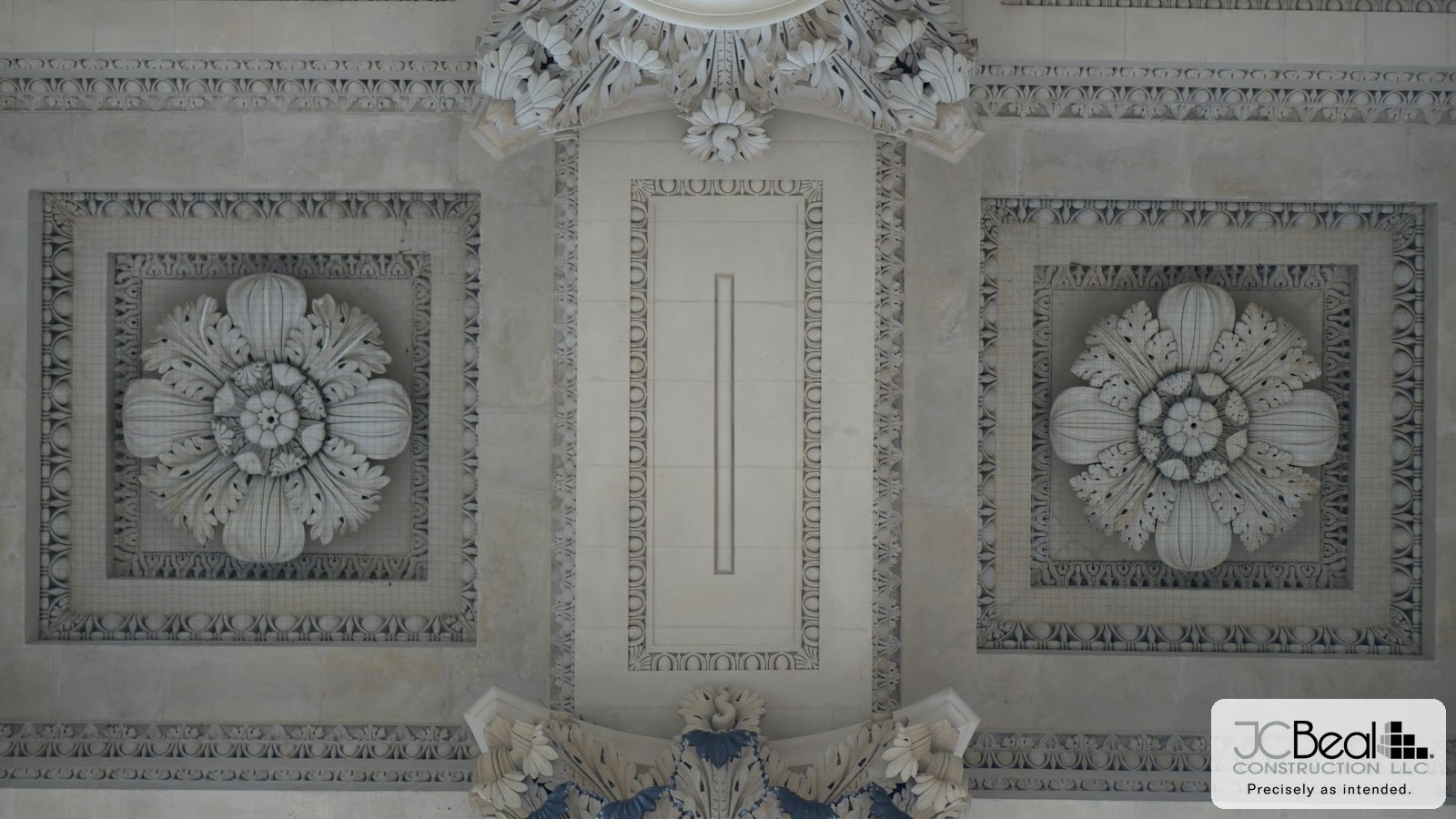
Saving the Ceiling: Why Historic Plaster and Ornamental Finishes Deserve a Restoration Plan, Not a Demo Order
Walk into most commercial renovations with a plaster ceiling in rough shape, and the instinct is predictable: tear it out, hang drywall, move on. For institutional and commercial owners sitting inside a historic building — a courthouse, a hotel, a civic hall, a converted school — that instinct is usually the wrong call. Decorative plaster ceilings, ornamental cornices, and cast rosettes are not just finish material. They are often the single most character-defining feature left in a building, and once they come down, they do not come back.
Why Plaster Gets Marked for Demolition
Ornamental plaster fails for ordinary reasons: roof leaks, failed flashing, decades of humidity cycling, or a mechanical retrofit that punched through a ceiling without a plan. By the time a General Contractor is called in, cracking and sagging can look like total loss. On a compressed schedule — and with institutional and insurance-driven restoration clients, schedule pressure is constant — drywall is faster to price, faster to install, and easier for a subcontractor to warranty.
The problem is that speed and preservation are not actually in conflict as often as they appear. Most plaster failure is localized. A ceiling with visible cracking in one bay and water staining in a corner may have 80% of its ornamental detail fully intact. Treating the whole ceiling as a loss because part of it is damaged is the same mistake as condemning an entire masonry façade because one course of brick spalled.
What an Assessment Actually Looks Like
Before any ceiling in a historic building gets a demolition order, it deserves the same documented process JC Beal applies to a masonry façade or a structural timber frame: a hands-on survey, by someone who has pulled plaster before, that separates three categories of damage.
- Cosmetic loss — surface cracking, paint failure, minor staining. This is repairable in place with patch plaster and in-kind finishing.
- Structural detachment — the plaster keys (the material that locks plaster to lath) have failed and the ceiling is at risk of falling, even though the ornamental face looks intact. This requires stabilization, not automatic removal — typically plaster washers, consolidation, or a hidden support system installed from above.
- Total material loss — the plaster or its lath has degraded beyond saving. Even here, a cast can often be pulled from an intact section elsewhere in the building before anything is removed, so a replica mold exists for the gap.
That third category is smaller than most owners expect. On most projects JC Beal has assessed, it accounts for well under a quarter of the ceiling area a first-pass contractor wanted to demolish outright.
The Financial Case, Not Just the Preservation Case
For board members and institutional owners, the argument for saving ornamental plaster has to pencil, not just look good in a presentation. Three factors usually make restoration the more defensible decision:
Replication is expensive and slow. Reproducing a run of decorative cornice or a cast ceiling rosette from scratch means sculpting a new master, pulling new molds, and casting — often at a higher cost than stabilizing and patching the original, with a longer lead time that can hold up a schedule far more than careful in-place repair would.
Historic tax credit review will ask. On projects routed through state or federal historic tax credit programs, reviewers specifically flag loss of character-defining interior features. A ceiling demolished without documentation can jeopardize credit eligibility on the entire project — a risk that dwarfs the modest cost difference between patch repair and wholesale replacement.
Tenants and institutional users notice. A restored lobby ceiling or a preserved assembly-hall cornice is part of what lets an owner market space in a landmark building as a landmark building, rather than a generic office floor with old bones.
Precisely as Intended
None of this means every damaged ceiling is salvageable, or that restoration is always the right call — sometimes a section truly is gone, and an honest replication is the correct path forward. But that determination should come from an assessment, not a demolition estimate written on day one. A contractor who has actually repaired ornamental plaster knows the difference between a ceiling that is failing and a ceiling that is finished — and that distinction is worth getting right before anything comes down.
If your building has decorative plaster, cast cornice work, or ornamental ceilings that a previous contractor wrote off, it's worth a second look before demolition starts. Connect with our team to have it assessed properly.