
Lime Mortar or Portland Cement? The Repointing Decision That Determines Whether a Historic Masonry Wall Survives
A wall built before 1930 was almost never laid with the mortar a modern crew reaches for by default. It was laid with lime — a softer, more breathable binder than the Portland cement that has dominated construction since the mid-20th century. When a repointing crew doesn't know that, or doesn't act on it, the repair can do more damage to a historic wall than the decades of weather it was meant to fix.
This is one of the most consequential decisions in any historic masonry project, and one of the least visible to the owner once the work is finished. Here is what institutions and building owners in Detroit and Toledo should understand about it before a contractor opens a bag of mix.
Why the Binder Matters More Than the Color Match
Historic brick and stone are relatively soft and porous compared to modern masonry units. The lime mortar they were originally set in is softer still — intentionally so. Lime mortar is permeable, allowing moisture that gets into a wall from rain, snowmelt, or capillary action to migrate back out through the joints and evaporate. It is also somewhat flexible, moving with seasonal thermal and moisture cycles instead of fighting them.
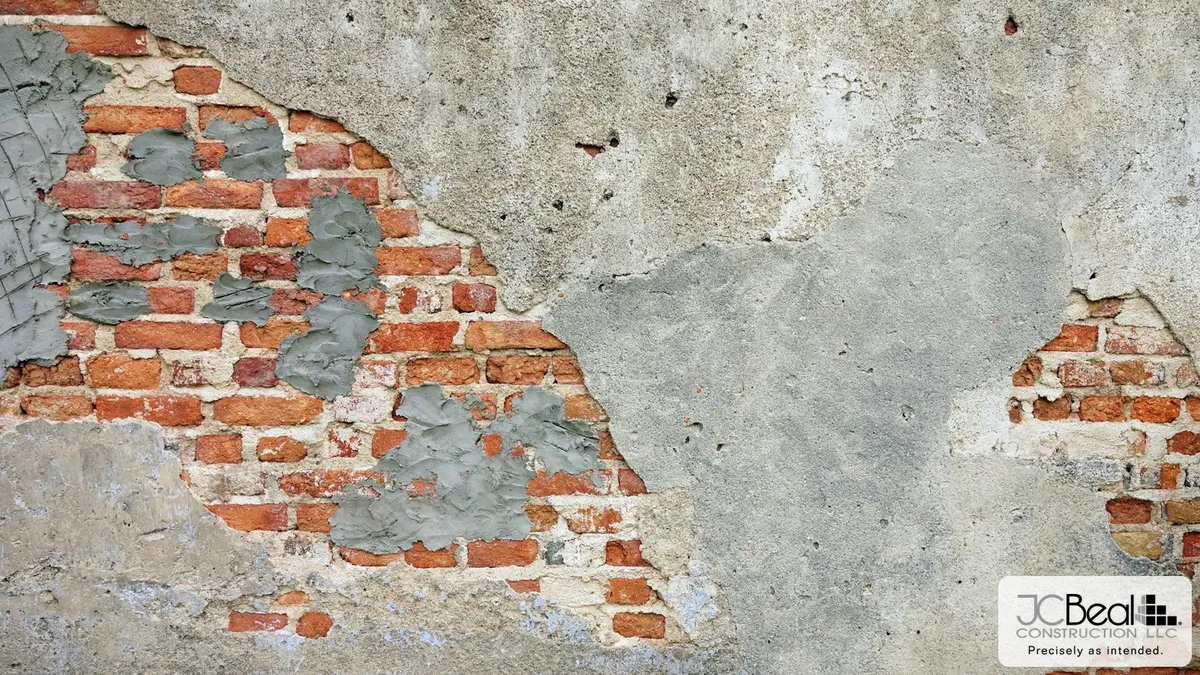
Portland cement mortar is harder and far less permeable. Pack it into joints between soft historic brick, and the wall's moisture stops exiting through the mortar — the path of least resistance it was designed to use. Instead, water migrates toward the only material left that will let it out: the face of the brick itself. Over repeated freeze-thaw cycles, that moisture trapped just behind the brick face spalls it away, a condition called "brick sacrifice" because the harder modern mortar survives at the direct expense of the historic material it was meant to protect.
What a Correct Repointing Assessment Looks Like
Mortar analysis, not a visual guess
Determining what binder a wall was built with is a lab question, not an eyeball question. A small sample of existing, undisturbed mortar can be analyzed for binder type, aggregate, and approximate mix ratio. Guessing based on the building's age gets most projects close, but additions, prior repairs, and regional supplier practices all introduce exceptions worth confirming before a full repointing scope is written.
Matching compressive strength to the masonry unit, not exceeding it
The guiding principle in historic repointing is that the mortar should always be softer than the masonry unit it holds, never harder. This is counterintuitive to anyone trained on modern construction, where stronger is usually treated as better. In a historic wall, a mortar joint is designed to be the sacrificial, maintainable element — something a mason can rake out and replace again in another eighty years without ever touching the brick or stone itself.
Joint profile and tooling that match the original
Beyond chemistry, the visual profile of the joint — struck, raked, weathered, or flush — affects both appearance and water-shedding performance. A repointing crew that mixes joint profiles across a single facade, or over-grinds original joints into a wider reveal than the building was built with, creates a visibly patched look even when the mortar formula itself is correct.
Why This Belongs in the Owner's Scope Review, Not Just the Mason's
For institutions and commercial owners, a repointing line item is often treated as routine maintenance and bid accordingly. It should be reviewed with the same scrutiny as a structural repair. A low bid built around standard Portland cement mortar will almost always undercut a bid that specifies a lime-based or lime-Portland hybrid mix formulated to match the original masonry — and the gap in long-term cost shows up ten to twenty years later, in spalled brick faces and a second, far more expensive repair.
We've walked this exact decision with owners restoring 1920s brick facades and civic landmarks alike — matching the material is only half the job if the mortar fights the wall for the next fifty years. If your building's joints are due for attention, connect with our team before the bids come in. The mix matters precisely as intended.