
Mold After the Water: Why Fast, Documented Remediation in a Historic Building Protects Both Health and the Claim
Water gets all the attention in the first 48 hours after a fire or a burst line. Crews extract standing water, run blowers, and point to drying meters that are trending in the right direction. But the damage that actually threatens a historic building — and the insurance claim tied to it — often shows up two, three, even four weeks later, hidden inside a wall cavity nobody opened back up.
That's mold. And in a building with balloon-frame construction, true masonry walls, and a century of trapped moisture history already baked into the materials, it behaves differently than it does in a modern structure. Treating it like a standard remediation job is one of the fastest ways to turn a contained loss into a disputed claim.
Why Historic Buildings Grow Mold Faster — and Hide It Longer
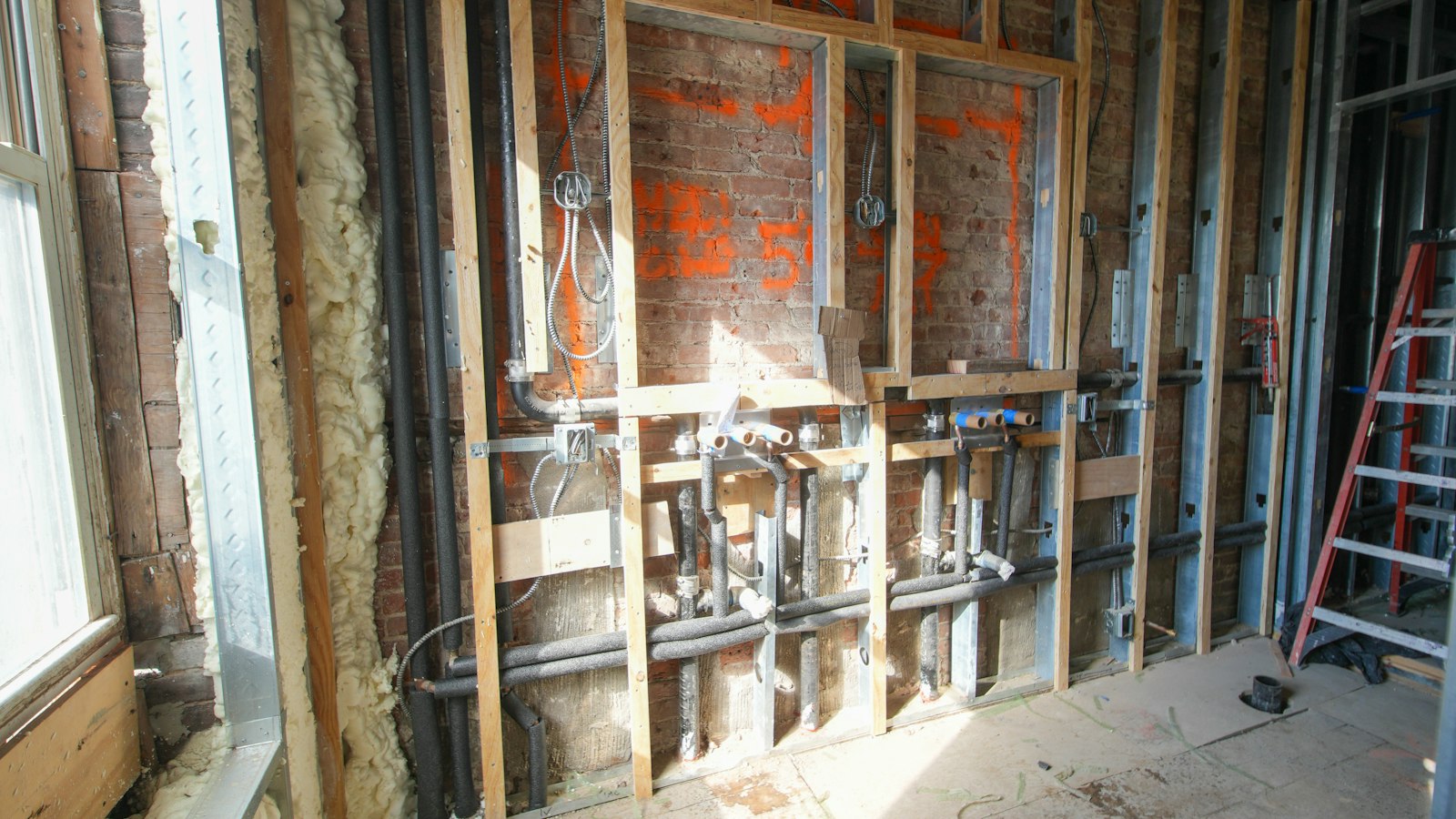
Older masonry and plaster assemblies are, by design, more forgiving of moisture than modern drywall-and-batt construction. That's also what makes them dangerous after a loss. Lime plaster, horsehair lath, and unfinished brick absorb and hold water rather than shedding it, which means a wall can read "dry" at the surface while the cavity behind it stays damp for weeks. Balloon framing — common in pre-1930s commercial and institutional buildings — gives that moisture a continuous, unblocked path to travel between floors, so a basement or ground-floor event can show up as a mold colony in a third-floor stud bay with no visible connection between the two.
We've walked into buildings where a water loss was closed out as fully dried, only to find active mold growth behind trim and baseboards six weeks later once an unrelated project opened the wall. The surface readings were accurate. They just weren't asking the right question.
The Documentation Gap That Costs Owners Their Claim
Insurance carriers distinguish sharply between water damage (generally covered) and mold damage (frequently excluded or capped) unless the policyholder can show the mold is a direct, promptly-remediated consequence of a covered loss. That distinction lives entirely in the paper trail. The questions an adjuster will ask — and that your contractor's documentation needs to answer before they're asked — are specific:
- When was the water loss discovered, and when did remediation start?
- What moisture readings were taken, where, and on what schedule?
- Was containment set up before demolition began, and is that documented with photos?
- Were air quality or surface samples taken before and after remediation?
- What was removed versus what was dried and retained, and why?
This is the same discipline we outline in our breakdown of what a fire restoration contractor's documentation must include — the mold conversation is simply the sharpest edge of that same requirement. A gap of even a few days between discovery and action gives a carrier room to argue the growth resulted from delayed mitigation rather than the original covered event, and that argument shifts cost back to the building owner.
Remediation in a Building You Can't Just Gut
In a modern building, aggressive demolition back to the studs is often the fast, defensible answer. In a landmark, that approach can destroy material you have a legal and financial obligation to preserve — original plaster, millwork, or masonry that a historic district commission or tax-credit agreement requires you to retain wherever feasible. The remediation plan has to work both problems at once: eliminate the mold risk and protect what's irreplaceable.
That typically means sequencing containment and negative air pressure by zone rather than opening the whole floor at once, hand-removing damaged plaster in sections instead of demolishing full walls, and drying masonry slowly enough to avoid cracking historic brick or stone — the same material science we cover in assessing hidden risks in old buildings, since a mold investigation frequently uncovers lead paint or legacy framing issues in the same opened wall. Every piece of original material that gets saved rather than replaced needs its own moisture-clearance documentation, separate from the general remediation report, because it's the piece a preservation reviewer or tax-credit auditor will ask about later.
What Building Owners Should Ask Their Contractor on Day One
If you own or manage an institutional, commercial, or multifamily building and you're dealing with any water event — a fire's suppression water, a failed roof, a burst supply line — ask these questions before remediation starts, not after:
- Who is documenting moisture content, and how often, and is that log shared with me and my carrier in real time?
- What is the containment plan for each affected zone, and is it photographed before work begins?
- Which original materials are being preserved, and what's the plan to verify they're fully dry before they're closed back in?
- Is there a written timeline from discovery to remediation start that I can hand to my adjuster?
These aren't bureaucratic extras. They're the difference between a clean claim and a dispute, and between a building that keeps its historic character and one that loses it to a rushed decision made under pressure. We've seen both outcomes come from the same type of loss — the only variable was how the first two weeks were handled. For the sequencing we use after suppression water specifically, see how we approach water damage after a fire.
Precisely as Intended, Even When the Damage Is Invisible
A hundred-year-old building earned its character one decision at a time, long before anyone could see mold spores on a lab report. Protecting that legacy after a loss means treating moisture, documentation, and preservation as one job, not three. That's the standard we hold every restoration to — restored precisely as intended, whether the damage is obvious or hiding behind the plaster.
If your building has an active water loss, or you suspect one that was never fully resolved, connect with our team before the next phase of work closes the wall back up.